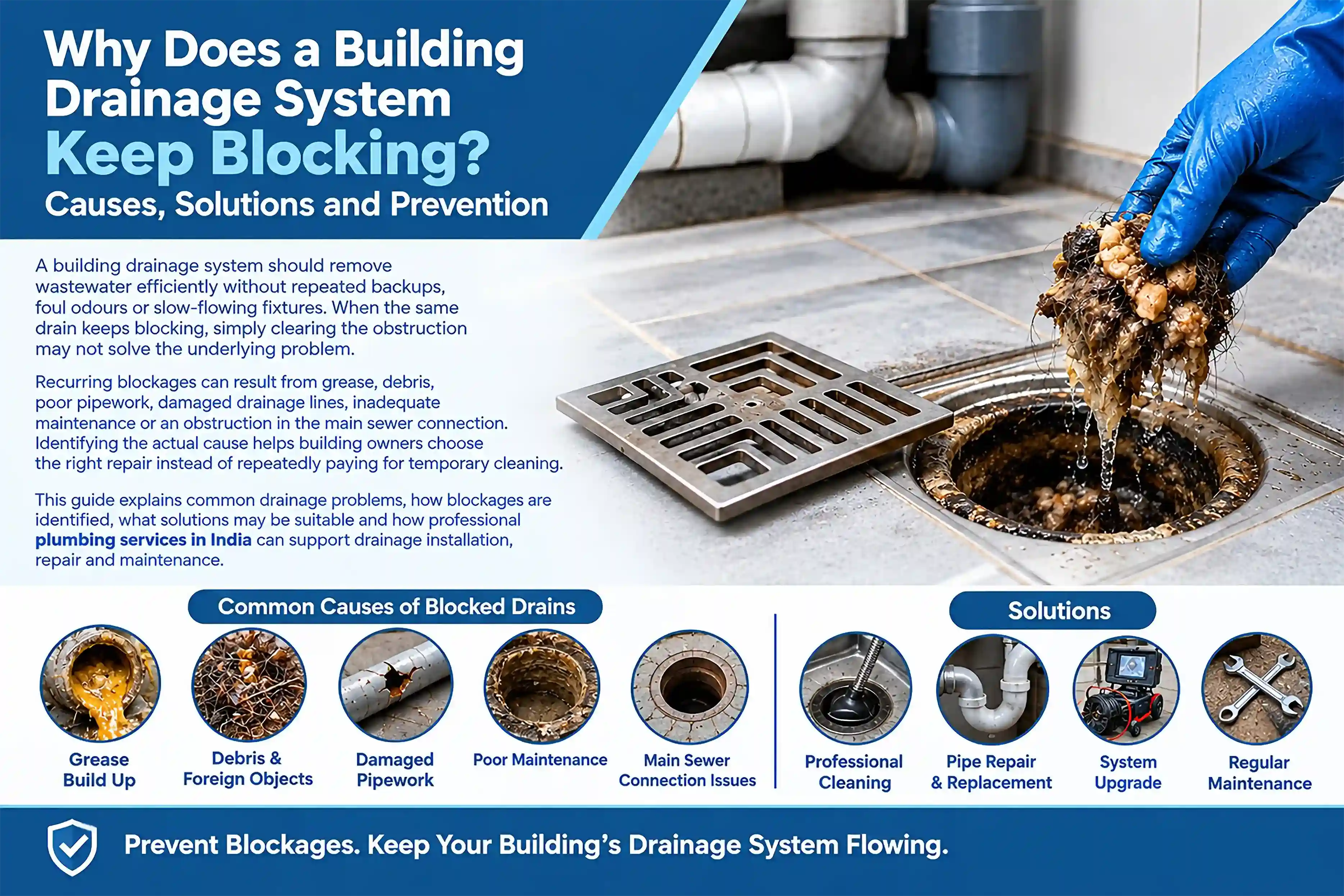
A building drainage system should remove wastewater efficiently without repeated backups, foul odours or slow-flowing fixtures. When the same drain keeps blocking, simply clearing the obstruction may not solve the underlying problem.
Recurring blockages can result from grease, debris, poor pipework, damaged drainage lines, inadequate maintenance or an obstruction in the main sewer connection. Identifying the actual cause helps building owners choose the right repair instead of repeatedly paying for temporary cleaning.
This guide explains common drainage problems, how blockages are identified, what solutions may be suitable and how professional plumbing services in India can support drainage installation, repair and maintenance.
Why Does a Building Drainage System Keep Blocking?
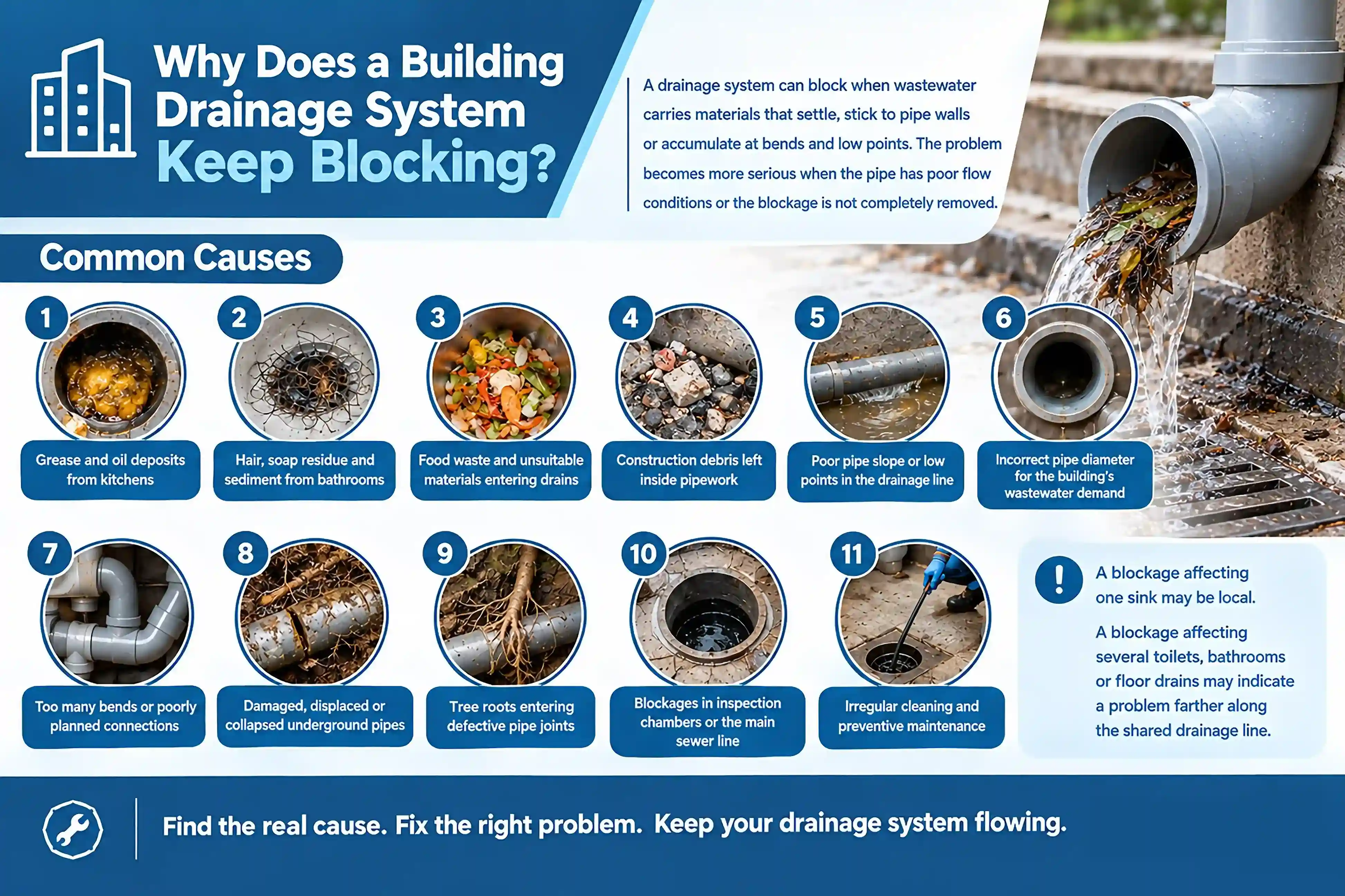
A drainage system can block when wastewater carries materials that settle, stick to pipe walls or accumulate at bends and low points. The problem becomes more serious when the pipe has poor flow conditions or the blockage is not completely removed.
Common causes include:
- Grease and oil deposits from kitchens
- Hair, soap residue and sediment from bathrooms
- Food waste and unsuitable materials entering drains
- Construction debris left inside pipework
- Poor pipe slope or low points in the drainage line
- Incorrect pipe diameter for the building's wastewater demand
- Too many bends or poorly planned connections
- Damaged, displaced or collapsed underground pipes
- Tree roots entering defective pipe joints
- Blockages in inspection chambers or the main sewer line
- Irregular cleaning and preventive maintenance
A blockage affecting one sink may be local. A blockage affecting several toilets, bathrooms or floor drains may indicate a problem farther along the shared drainage line.
What Are the Common Signs of a Blocked Building Drainage System?
Slow Drainage From Sinks and Floor Drains
Water that takes longer than usual to drain may indicate a partial obstruction. The pipe may still be passing water, but the available flow area has been reduced.
Water Backflow From Floor Traps
Water rising through a floor drain or trap can indicate that wastewater is unable to move through the downstream pipe. This should be investigated quickly, particularly in basements and commercial buildings.
Repeated Toilet Blockages
A toilet that blocks repeatedly may have a local obstruction, but recurring problems can also point to a restricted soil pipe, shared drainage line or damaged underground connection.
Foul Odours From Drainage Lines
Persistent odours may be associated with stagnant wastewater, accumulated deposits, damaged traps or problems with drainage ventilation. Odour alone does not identify the exact cause.
Gurgling Sounds in Pipes
Gurgling can occur when air and wastewater move through a partially restricted drainage line. If it appears together with slow drainage or water-level changes, the system should be inspected.
Overflowing Inspection Chambers
An overflowing inspection chamber may indicate a downstream blockage, excessive inflow, inadequate capacity or a problem in the connection beyond the building.
What Causes Drainage Blockages in Different Parts of a Building?
Kitchen Drainage Blockages
Kitchen wastewater can carry grease, oil and food particles into the drainage system. Grease may cool and attach to pipe surfaces, while food particles can accumulate around bends or combine with other deposits. Avoid treating kitchen drains as waste-disposal points. Grease should be collected separately, and food scraps should not be washed into the pipework.
Bathroom and Floor Drain Blockages
Bathroom drains commonly collect hair, soap residue, dirt and sediment. Floor drains may also receive dust, mud and debris carried in from footwear or cleaning activities. Drain covers and strainers can help reduce the amount of solid material entering the pipe. They do not replace regular cleaning.
Toilet Drainage Blockages
Toilet drainage lines can become restricted when unsuitable materials are flushed or when the connecting pipe has a defect. Recurring blockages may also occur when the obstruction is farther downstream than the toilet itself. A plunger or basic cleaning method may clear a minor local obstruction, but recurring problems require inspection rather than repeated forceful flushing.
Basement and Parking Area Drainage Blockages
Basement drains, ramps and parking-area drainage points may receive mud, leaves and surface debris. During heavy rainfall, additional runoff can overload poorly maintained drainage points. These areas require regular removal of debris from grates, channels, catch pits and accessible inspection points.
Main Drainage Line Blockages
A blockage in a shared main line can affect several fixtures at the same time. Common signs include multiple slow drains, simultaneous toilet problems or wastewater backing up at lower-level fixtures. When several areas are affected, cleaning only one fixture is unlikely to provide a lasting solution.
How Can You Identify the Actual Cause of a Drainage Blockage?
A useful inspection begins by identifying the pattern of the problem rather than immediately choosing a cleaning method.
- Check which fixtures are affected.
- Compare upper and lower floors.
- Inspect accessible traps and drain covers.
- Check inspection chambers.
- Look for signs of recurring deposits.
- Assess the drainage layout.
- Inspect underground pipework when necessary.
- Check the main connection.
How Is a Building Drainage System Blockage Cleared?
The appropriate cleaning method depends on the blockage location, pipe material, obstruction type and condition of the drainage line.
Manual Cleaning for Minor Blockages
Manual cleaning may be suitable for accessible drain covers, traps and small local obstructions. It should be carried out carefully to avoid damaging seals, fittings or pipe connections.
Drain Rods and Mechanical Cleaning
Mechanical cleaning equipment can help remove obstructions from suitable drainage lines. The equipment must match the pipe size, material and access conditions. Improper use can damage older or weakened pipes, so the method should be selected according to the system's condition.
High-Pressure Water Jetting
Water jetting can remove deposits and accumulated material from suitable drainage pipework. It may be useful where grease, sediment or other deposits have reduced the internal flow area. The pressure and nozzle selection should be appropriate for the pipe and its condition.
Inspection of Underground Drainage Pipes
When a blockage returns after cleaning, the pipe may need to be inspected for cracks, displaced joints, root intrusion, deformation or other defects. A deeper inspection helps determine whether the problem is caused by an obstruction alone or by a damaged section of pipe.
Repair or Replacement of Damaged Pipe Sections
Cleaning cannot permanently resolve a collapsed, severely damaged or incorrectly installed pipe. In such cases, the affected section may need repair or replacement. The solution should address the actual defect while maintaining suitable access, flow and connection arrangements.
Why Does the Drainage System Keep Blocking After Cleaning?
Repeated cleaning without identifying the cause can leave the underlying problem unresolved.
The Blockage Was Only Partially Removed
A cleaning method may create a temporary passage through the obstruction while deposits remain on the pipe walls. These deposits can collect more material and restrict the flow again.
Grease or Sediment Remains Inside the Pipe
A drain may appear to work immediately after cleaning but continue to accumulate grease, sludge or sediment. This is particularly relevant to kitchen drainage and low-flow sections.
The Pipe Has Insufficient Slope
Drainage pipework relies on suitable flow conditions to move wastewater and suspended material. If a section has inadequate slope or an unintended low point, solids may settle and accumulate.
The Pipe Diameter Is Unsuitable
A pipe that is too small for the connected demand may experience restricted flow and frequent blockages. Pipe sizing should be considered during design rather than only after problems occur.
The Main Line Remains Blocked
Clearing an individual fixture will not solve a blockage in a shared downstream line. If several fixtures show symptoms, the main drainage route should be assessed.
Construction Debris Has Entered the System
Cement residue, sand, packaging material and other construction debris can create difficult obstructions. Drainage openings should be protected during construction and renovation work.
The Drainage Pipe Is Damaged
Cracks, displaced joints, root intrusion or collapsed sections can trap debris and restrict flow. These defects require inspection and repair rather than repeated routine cleaning.
How Can Poor Drainage Design Cause Repeated Blockages?
Incorrect Pipe Slope
A drainage line needs suitable slope and alignment for wastewater to move effectively. Incorrect installation can create slow-flowing sections where solids settle.
Inadequate Pipe Diameter
Pipe diameter should be selected according to the expected wastewater flow and connected fixtures. Undersized pipework may become more vulnerable to restriction.
Too Many Sharp Bends
Unnecessary bends can increase resistance and create locations where debris accumulates. Good planning should provide practical routing and suitable access for maintenance.
Poorly Positioned Inspection Chambers
Inspection chambers should allow practical access to relevant sections of the drainage network. Poor positioning can make cleaning and inspection difficult.
Insufficient Drainage Ventilation
Drainage ventilation supports pressure balance and helps wastewater move through the system. Ventilation problems may contribute to slow drainage, trap issues or unpleasant odours.
Incorrect Connection Between Drainage and Sewer Lines
A poor connection, damaged outlet or obstruction at the main discharge point can affect the entire building. The internal system and external connection should be assessed together when necessary.
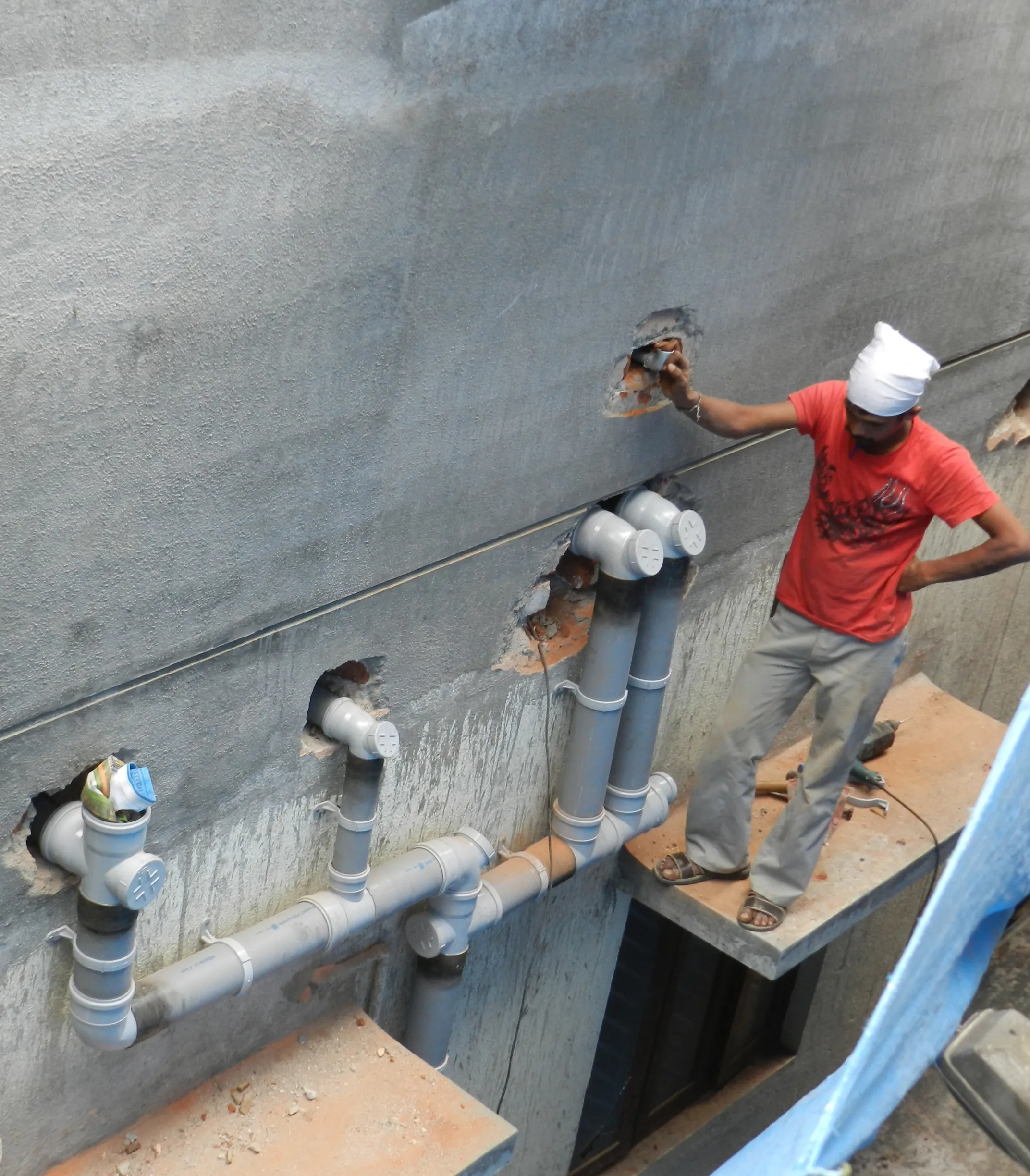
What Components Support a Reliable Building Drainage System?
| Component | Purpose |
|---|---|
| Drainage pipes | Carry wastewater away from fixtures |
| Floor traps | Help prevent unwanted gases from entering occupied areas |
| Drain covers and strainers | Reduce the entry of solid debris |
| Inspection chambers | Provide access for inspection and maintenance |
| Soil and waste pipes | Carry wastewater from toilets and other fixtures |
| Ventilation arrangements | Support pressure balance in drainage pipework |
| Cleanout or access points | Help maintenance teams reach restricted sections |
| Stormwater drains | Carry rainwater separately where the design requires it |
| Main drainage connection | Transfers wastewater from the building to the receiving system |
| Overflow and discharge arrangements | Manage water movement at designated drainage points |
Not every building uses the same arrangement. The required components depend on the building type, drainage layout, wastewater sources and applicable plumbing requirements.
How Should a Building Drainage System Be Maintained?
Preventive maintenance should focus on keeping drainage points accessible, reducing the entry of unsuitable materials and identifying early signs of restriction.
- Clean floor traps regularly.
- Clear drain covers and grates.
- Keep grease out of kitchen drains.
- Inspect accessible drainage points.
- Clean inspection chambers when required.
- Check drainage points before heavy rainfall.
- Inspect shared drainage lines in large buildings.
- Investigate recurring blockages.
- Protect drainage openings during construction.
- Keep maintenance records.
How Can Building Owners Prevent Drainage Blockages?
Prevent Improper Waste Disposal
Toilets, sinks and floor drains should only receive materials suitable for the intended drainage system. Solid waste, grease and construction debris should be handled separately.
Use Suitable Drain Covers and Strainers
Strainers can reduce the amount of hair, food particles and other solids entering drainage pipes. They should be cleaned regularly so they do not themselves restrict flow.
Keep Kitchen Grease Out of Drainage Pipes
Grease is one of the main materials that can accumulate inside kitchen drainage lines. Proper waste collection and suitable maintenance help reduce this risk.
Schedule Preventive Drainage Cleaning
Large buildings may benefit from planned inspection and cleaning based on usage, previous blockages and the condition of the system. The frequency should be determined from actual site requirements.
Inspect Drainage Lines Before Renovation Work
Renovation activities can introduce debris into existing drainage pipes. Existing lines should be protected, and any damaged or unsuitable sections should be assessed before new fixtures are connected.
Address Small Drainage Problems Early
Slow drainage, unusual odours and gurgling sounds can indicate developing problems. Early inspection may prevent a minor restriction from becoming a major backup.
Drainage Problems in Residential, Commercial and Industrial Buildings
Residential Buildings
Residential drainage problems often involve kitchen sinks, bathrooms, toilets and floor traps. The inspection should determine whether the obstruction is limited to one fixture or connected to a shared line.
Apartment Complexes and Housing Societies
Apartment buildings have multiple fixtures connected to common drainage routes. A blockage in a shared line can affect several homes, making access, inspection chambers and planned maintenance especially important.
Commercial Buildings
Offices, retail buildings, hotels and restaurants may experience high drainage usage. Kitchen wastewater, public toilets and floor cleaning can place different demands on the drainage network.
Industrial Facilities
Industrial drainage systems may carry wastewater with different characteristics from ordinary domestic wastewater. The drainage design, materials, treatment arrangements and maintenance approach should reflect the type of discharge. Industrial wastewater should not automatically be directed into a domestic drainage system without assessing the applicable treatment and discharge requirements.
What Should You Check Before Installing or Repairing a Building Drainage System?
- The building's number of fixtures
- Expected wastewater flow
- Pipe sizes and materials
- Pipe slope and routing
- Location of inspection chambers
- Access for cleaning and inspection
- Separation of stormwater and wastewater where required
- Existing drainage pipe condition
- Main sewer or discharge connection
- Ventilation arrangements
- Maintenance requirements
- Applicable local plumbing and drainage requirements
When Does a Building Need Professional Drainage Inspection?
Professional inspection is advisable when:
- Multiple fixtures are blocked at the same time.
- The same drain keeps blocking after cleaning.
- Wastewater backs up from floor traps.
- Inspection chambers overflow.
- Drainage odours continue after cleaning.
- There is suspected underground pipe damage.
- The building is undergoing renovation.
- The drainage system serves a large commercial or industrial facility.
- The main sewer connection may be restricted.
- The drainage layout appears to have poor slope or inadequate access.
Common Questions About Building Drainage Blockages
Why does my building drain keep blocking?
Repeated blockages may be caused by grease, debris, poor pipe slope, damaged pipework, unsuitable pipe sizing or a downstream obstruction. The cause should be identified before choosing a permanent solution.
How do I know whether the blockage is inside the building or in the main line?
If only one fixture is affected, the obstruction may be local. If several fixtures or lower-level drains are affected, the shared drainage line or main connection may need inspection.
Can poor pipe slope cause repeated drainage problems?
Yes. A drainage line with unsuitable slope or unintended low points may allow solids and sediment to settle, increasing the risk of recurring restrictions.
How often should a commercial drainage system be cleaned?
There is no single schedule suitable for every building. Cleaning frequency should depend on wastewater usage, previous blockages, pipe condition, kitchen activity and the findings of routine inspections.
When should a blocked drainage pipe be repaired instead of cleaned?
Repair may be necessary when the pipe is cracked, displaced, collapsed, root-affected or incorrectly installed. Cleaning alone cannot correct a structural or design defect.
Conclusion
A building drainage system that keeps blocking should not be treated as a cleaning issue alone. The recurring problem may be connected to grease, debris, poor drainage design, damaged pipework, inadequate access or a blockage in the main line.
The most reliable approach is to identify the affected section, inspect the drainage system, use a suitable cleaning or repair method and introduce preventive maintenance. Proper drainage planning also helps reduce future blockages in residential, commercial and industrial buildings.
Request a Quote for Building Drainage Services
Need help with drainage inspection, blockage removal, drainage repair or complete drainage system work? Contact VM Engineers to discuss your building's requirements and arrange a suitable plumbing solution.